Monday, October 12, 2026
Sunday, October 11, 2026
Torah Im Derech Eretz: Rabbi Dr Isaac Breuer's Moriah pt 12: Metaphysics & Metahistory & Shabbos x2
Moriah by Rabbi Dr Isaac Breuer - October 11
VIEW RECORDING - 36 mins (No highlights)
Meeting Purpose
To explore Rabbi Breuer's concepts of history, meta-history, and the Jewish role.
Key Takeaways
- Two Shabbos Concepts: Shabbos HaBriah (creation) signifies God's control over nature, while Shabbos HaHistoria (history) signifies His control over nations.
- Am Yisrael's Unique Role: We are a "meta-historical" nation, a direct tool for God's plan, unlike other nations that seek autonomous sovereignty.
- Freedom Through Submission: Our freedom is contingent on being "slaves of God," a legal status that grants us immunity from human masters and makes us subjects of a constitutional monarchy.
- Universal Purpose: We represent God's universal kingship to the world, refuting the slander that we have a "nationalized God."
Topics
History vs. Meta-History
- History: The story of human autonomy and the resulting power struggles (e.g., Tower of Bavel, social/international wars).
- Meta-History: The story of God's direct intervention to fulfill His will (e.g., Yetziat Mitzrayim).
Shabbos: A Dual Testimony
- Shabbos testifies to both creation and history.
- Shabbos HaBriah (Creation):
- Shabbos HaHistoria (History):
Am Yisrael: The Meta-Historical Nation
- Am Yisrael is a unique nation whose creation lacks a "natural cover," making us a direct tool for God's plan.
- Our history is distinct because it is God's story, not merely our own.
- Breuer connects this to the Zohar:
The Paradox of Freedom
- Our freedom is contingent on being "slaves of God" (Avdei Hashem), a legal status that grants immunity from human masters.
- Matan Torah: This event transformed our status in three stages:
- This constitutional framework explains how rabbis can rule on halachah independently, even against a perceived divine will.
Universalism vs. Particularism
- Breuer refutes the slander that Judaism has a "nationalized God."
- God is the universal King of the world.
- Am Yisrael's role is to represent this universal kingship to all nations.
- We are the nation that was sanctified by God, not the nation that nationalized God.
Next Steps
Friday, October 09, 2026
Understanding Creation: The Beginning of Bereishit - Uganda Shiur
Meeting Purpose
Exploring the spiritual and inspirational lessons of Bereshit (Genesis).
Key Takeaways
- Creation as a Spiritual Blueprint: Bereshit is an inspirational guide, not a scientific text. Rashi's view holds that the 6 days were blueprints, activated by Adam's prayer, making prayer the key to creation's function.
- Cycles of Creation: The Torah's opening (earth already present) is explained by Kabbalistic views of prior creation cycles. This accounts for fossils (e.g., dinosaurs) from previous worlds.
- Humanity's Role as a Reflection: Created b'Tzelem Elokim (in God's image), humans are meant to reflect God's light (kindness, compassion) into the world, just as the moon reflects the sun.
- The Tree of Knowledge & Teaching Integrity: Adam's miscommunication about the Tree of Knowledge (adding a "no-touch" rule) led to Eve's doubt. This teaches that leaders must distinguish between divine commands, rabbinic interpretations, and personal advice.
Topics
The Torah's Opening: A World in Flux
- The Torah opens with an existing, unformed world (
tohu va'vohu), not with creation from nothing. - Kabbalistic Interpretation: This implies prior creation cycles.
Days 1–4: Establishing the Framework
- Day 1: Light
- Day 2: Sky
- Day 3: Dry Land & Plants
- Day 4: Sun & Moon
Days 5–7: The Culmination
- Day 5: Fish & Birds
- Day 6: Animals & Humanity
- Day 7: Shabbat
The Garden of Eden & The Tree of Knowledge
- Human Purpose: To "till and tend" the Garden, meaning to work and improve the world.
- The Tree of Knowledge:
- Adam's Miscommunication:
- Lesson for Leaders: Distinguish clearly between divine commands, rabbinic interpretations, and personal advice to maintain credibility and prevent misguidance.
Next Steps
Wednesday, October 07, 2026
Rischa D'Araisa Season 14 Episode 6: Storming the Cockpit of Israeli Politics: The Tzibbur HaCharedi Party - with Rabbi Yitzchok Adlerstein

Rischa D'Araisa Season 14 Episode 6:
Storming the Cockpit of Israeli Politics:
The Tzibbur HaCharedi Party
- with Rabbi Yitzchok Adlerstein
https://listen.jewishpodcasts.fm/yeshivaofnewark/123474
or
Friday, October 02, 2026
Simchas Torah and Hakofos - Uganda Shiur
Meeting Purpose
To explore the Kabbalistic meaning of Simchat Torah dancing.
Key Takeaways
- Two Lights: Kabbalah distinguishes between Or Pnimi (internalized light, like learned Torah) and Or Makif (enveloping, external light, like the joy of Simchat Torah).
- Torah's Dual Nature: A Sefer Torah requires both black letters (Or Pnimi) and surrounding white parchment (Or Makif). The white space represents deeper, unwritten truths.
- Simchat Torah as Or Makif: The holiday's dancing (Hakafot) is a custom, not a commandment, symbolizing a spontaneous, collective reach for the Or Makif after internalizing the year's Torah study.
- Year-Long Inspiration: The joy of Simchat Torah is an Atzeret—a gathering of spiritual energy—designed to provide inspiration and protection for the entire year.
Topics
The Two Lights of Kabbalah
The Sefer Torah: A Metaphor for Dual Light
- A Sefer Torah requires both black letters and surrounding white parchment to be valid.
- Black Letters → Or Pnimi: The explicit, written text that is learned and understood.
- White Parchment → Or Makif: The "space between the lines," representing deeper, unwritten meanings.
- Hierarchy of Holiness: Letters < Crowns/Tagin < White Space < Remaining Ink.
The High Holiday Journey: A Path to Or Makif
- The High Holidays provide a path to access Or Makif.
- Rosh Hashanah Shofar: A sound beyond words, like the white space around a letter.
- Yom Kippur: The ascent (yerusha) of the soul, which prepares the heart to receive the higher light.
- Sukkot: The descent of that light into the world, symbolized by the Sukkah.
Simchat Torah: Internalizing the Or Makif
- Simchat Torah is a custom, not a commandment, developed by the Jewish people.
- It is a spontaneous, collective expression of joy that arises after completing the year's Torah study.
- The dancing (Hakafot) around the Torah symbolizes reaching for the Or Makif—the surrounding, unwritten holiness—that lies beyond the text.
- Purpose: To internalize this external light and gather its spiritual energy (Atzeret) for the entire coming year.
Next Steps
Tuesday, September 29, 2026
Sitting Down During Hakafos While People Are Dancing With Sifrei Torah
A recording for the BHP daily Halachic Whatsapp group https://chat.whatsapp.com/Gz8rrxqRcfy9rMOXRLG6GS
Friday, September 25, 2026
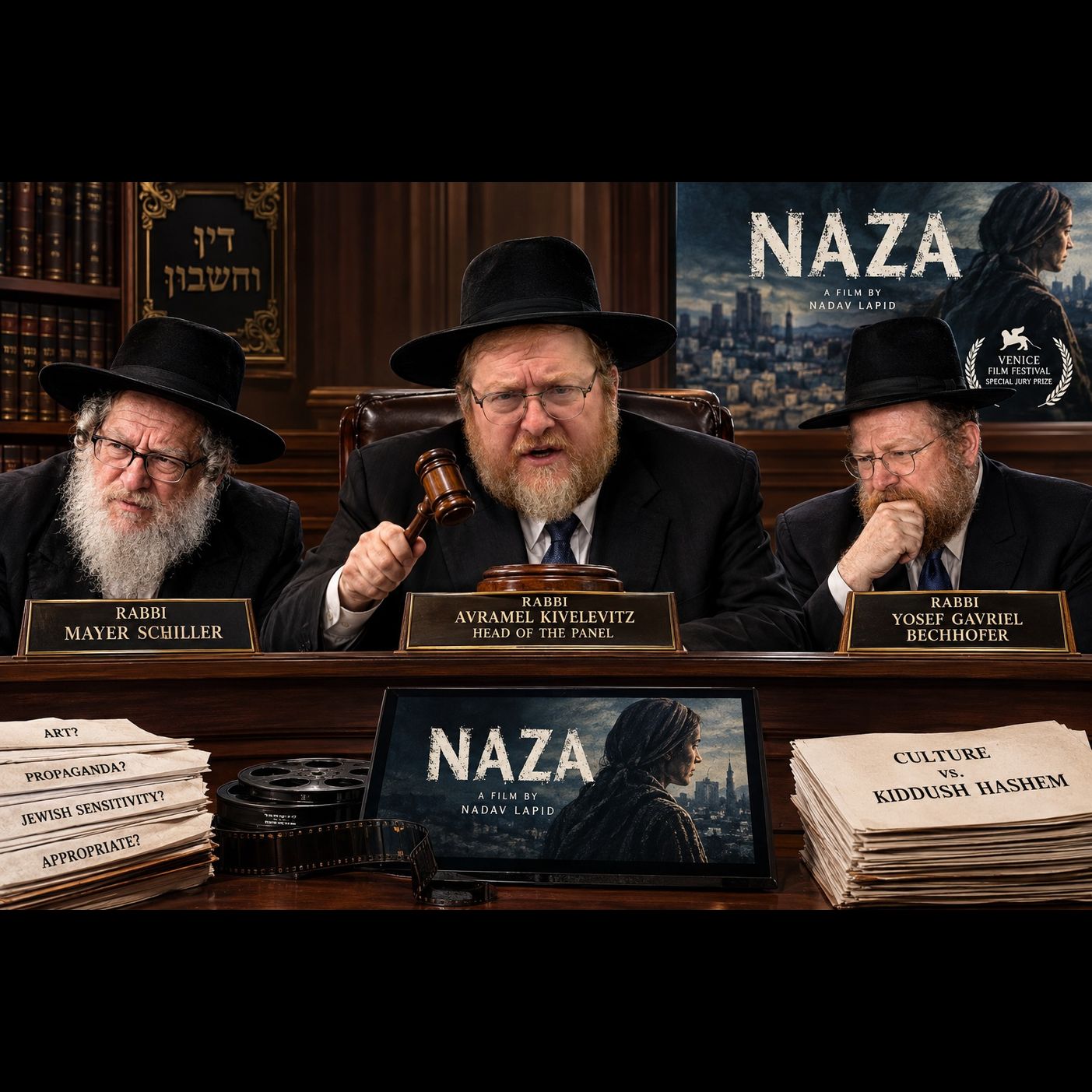
Rischa D'Araisa Season 14 Episode 5: The Naza Film and the Point of Free Choice

Rischa D'Araisa Season 14 Episode 5:
The Naza Film and the Point of Free Choice
(Collateral Damage and the Nekudas HaBechirah)
Thursday, September 24, 2026
The Gemara About Simchat Beit HaShoeivah (Sukkah 5th Perek) - Uganda Shiur
Fathom Summary:
Uganda Shiur - September 24
Meeting Purpose
To explore the spiritual significance and historical practices of Sukkot.
Key Takeaways
- Simchat Beit HaShoeva: The Temple's water-drawing ceremony was a legendary celebration of atonement and prayer for rain, so bright it lit all Jerusalem.
- Hillel's Philosophy: Hillel taught that every person's participation is essential ("If I am here, everyone is here") and that one's location is divinely ordained.
- Joy as a Mitzvah: The Sages' juggling acts (e.g., Rabbi Gamliel with 8 torches) demonstrated that even leaders must use joy to inspire the community.
- Halakhic Source: The women's balcony built for the celebration is the source for the men's/women's separation (mechitza) in synagogues.
Topics
Simchat Beit HaShoeva: The Temple Celebration
- A legendary Sukkot celebration marking atonement (post-Yom Kippur) and praying for rain.
- Water-Drawing Ceremony (Nisuch HaMayim):
- The Spectacle:
- Lighting: Four giant golden candelabra, each with a 120-load oil basin, were lit using wicks made from worn priestly garments.
- Illumination: The light was so bright it illuminated all of Jerusalem, enabling a woman to sort wheat by its glow.
- Music & Dance: Levites played instruments on the 15 steps between courtyards (corresponding to the 15 Shir HaMa'alot Psalms), while pious men danced with flaming torches.
Hillel's Teachings on Community & Divine Providence
- Essential Participation: Hillel's statement, "If I am here, everyone is here. If I am not here, who is here?" emphasizes that every individual's contribution is vital.
- Divine Presence: Hillel taught, "If you come to my house, I will come to your house. If you do not come to my house, I will not come to your house."
- Divine Providence: The Gemara states, "The feet of a person are responsible for him. To the place he is in demand, there they lead him."
- King Solomon's Scribes: Solomon tried to save his scribes from death by sending them to Luz, a town where people don't die. However, the Angel of Death's mission was to take them in Luz, so Solomon's action inadvertently fulfilled their destiny.
- Lesson: One's location is divinely ordained for a reason—either for a specific purpose or for atonement.
The Sages' Joyful Example
- The Sages actively participated in the celebration, demonstrating that joy is a holy act.
- Rabbi Shimon ben Gamliel: Juggled eight flaming torches and performed a kidah (a prostration so deep one's thumbs touch the ground).
- Other Sages: Juggled knives (Levi), wine glasses without spilling (Shemuel), and eggs (Abaye).
- Lesson: Leaders must use joy to inspire the community and make others happy.
Halakhic & Spiritual Insights
- Synagogue Separation (Mechitza): The women's balcony at the Simchat Beit HaShoeva is the source for the men's/women's separation in synagogues.
- Sukkot Sleep: The Gemara questions how people stayed awake all night for the celebration. The answer is they "dozed on each other's shoulders" but did not get a full night's sleep.
- Lulav & Etrog: The mitzvah can be fulfilled at home.
Next Steps
Thursday, September 17, 2026
The Gemara About Yom Kippur (Teshuvah, Categories of Sin, Chillul Hashem), Yoma 86a - Uganda Shiur
Uganda Shiur - September 17
Meeting Purpose
To review the Jewish concept of repentance (Teshuvah) and atonement for Yom Kippur.

Key Takeaways
- Atonement is a process: It requires repentance (Teshuvah) and Yom Kippur, with death necessary for the most severe sins. Yom Kippur alone does not atone for sins.
- Sins against people require human appeasement: Yom Kippur atones for sins against God, but not for sins against others until the wronged party is appeased.
- Desecrating God's name (Chilul Hashem) is the worst sin: It requires Teshuvah, Yom Kippur, suffering, and death for full atonement.
- Fasting rules are strict: Healthy adults must fast. Breastfeeding women must fast unless medically unable, in which case they eat/drink small amounts (<28g - not 50g as mistakenly mentiond in the shiur) every 7 mins. Children start fasting at 12 (boys) or 11 (girls).
Topics
The Atonement Process
- Mishnah Yoma Framework:
- Rabbi Mattia ben Charash's Four Levels of Atonement:
- Positive Mitzvah Violation (Omission): Teshuvah alone atones immediately.
- Negative Mitzvah Violation (Commission): Teshuvah suspends punishment; Yom Kippur completes atonement.
- Karet/Death-Penalty Sin: Teshuvah & Yom Kippur suspend punishment; suffering (e.g., self-imposed fasts) completes atonement.
- Chilul Hashem (Desecration of God's Name): Requires Teshuvah, Yom Kippur, suffering, and death for full atonement.
Chilul Hashem (Desecration) vs. Kiddush Hashem (Sanctification)
- Chilul Hashem: Any act by a Jew that causes non-Jews to view Judaism negatively.
- Kiddush Hashem: Any act that causes non-Jews to view Judaism positively.
Yom Kippur Fasting Rules
- Breastfeeding Women: Must fast unless medically unable. If unable, they should eat/drink small amounts (<28g) every 7 minutes to avoid a full break.
- Children: Begin fasting at age 12 (boys) or 11 (girls)
Tuesday, September 08, 2026
Shalom Aleichem When Shabbat and Rosh Hashanah Coincide
Shalom Aleichem (and Kabbalat Shabbat) when Shabbat and Rosh Hashanah (or another Yom Tov) Coincide.
A recording for the BHP daily Halachic Whatsapp group https://chat.whatsapp.com/Gz8rrxqRcfy9rMOXRLG6GS
Rischa D'Araisa Season 14 Episode 4: Does the 25th Anniversary of 9/11 Figure Into Our Rosh HaShanah's Zichron Teru'ah?