Friday, August 05, 2005

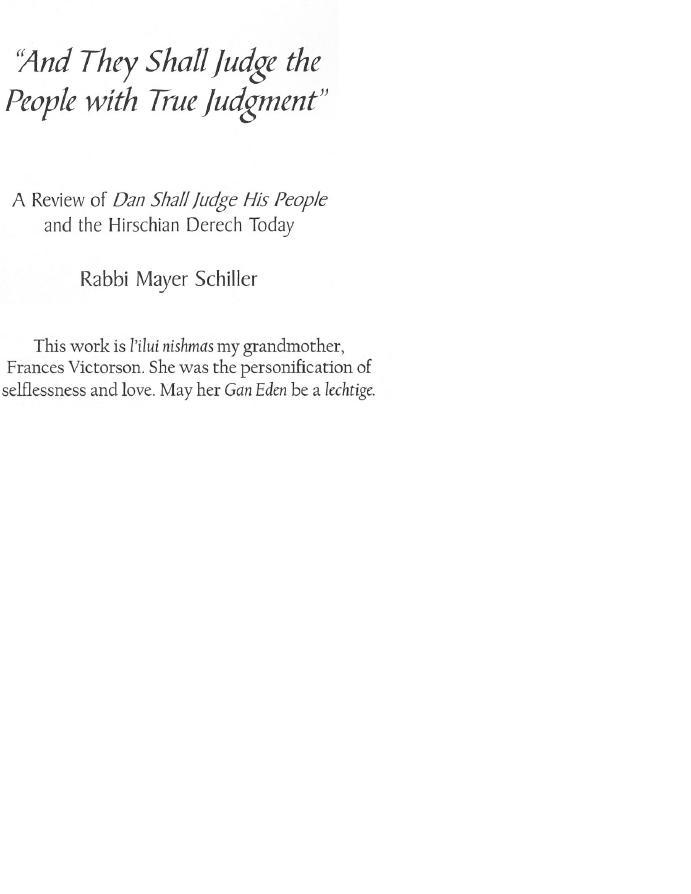
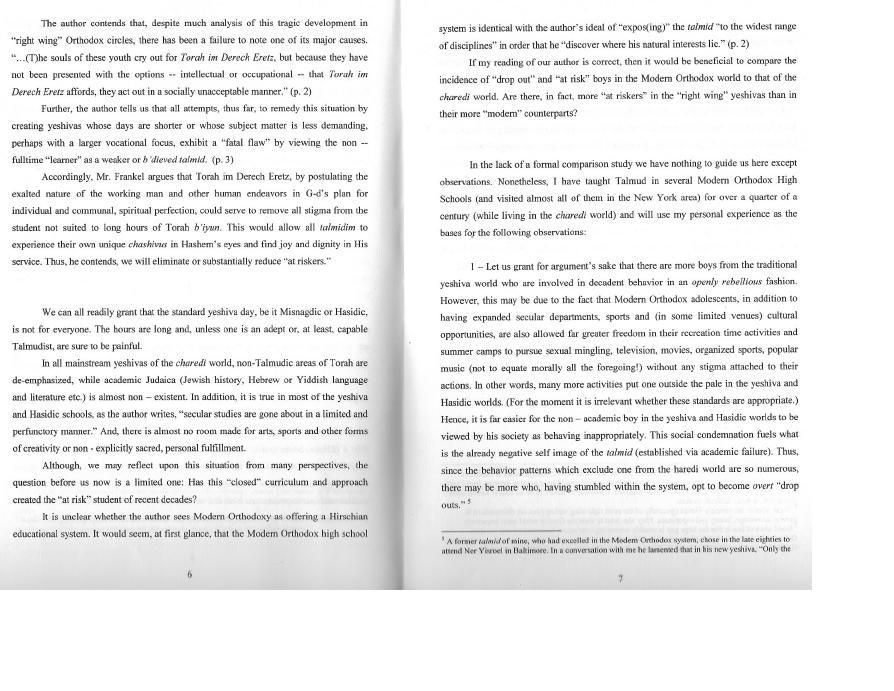
TIDE Redux: A Very Important Essay by Rabbi Mayer Schiller part 1

I have two minor disagreements with Rabbi Schiller, but otherwise I am very much in agreement with the essay. I can email a PDF upon request, but if you enlarge the jpeg's it is very readable. Several more parts will follow.


Wednesday, August 03, 2005

Chassidim, Misnagdim, and now Mussar

In response to the legitimate complaint that many made, that I neglected Mussar, I have expanded the table to include a third column:


Issue

Misnagdim

Mussar Differences

Chassidim

Ahavah

Downplayed and underdeveloped theme; too elusive to define and too dangerous to use as a focus.

Similar to other Misnagdim

Central theme (although not much time is spent developing it); essential for Dveykus.

Achilah U'Shesiyah

A physical activity only moderately elevated by Torah and Zemiros.

Similar to other Misnagdim

An essential catalyst for Ahavah; for Ha'olas Nitzotzos. Meals with Toiroh and Niggunim are core experiences.

Emes Va”Sheker

Unrelenting focus on reality, to the detriment of possible ecstasy – is it for real?

If anything, even more so – but reality lies more in the character and personality than in the Blatt Gemara.

A little blurry at the edges: If the experience is uplifting, does it matter if it's “really real?”

Bushah V'Azus

Harbors doubt, sometimes lacks confidence.

Paradoxical trends toward doubt and boldness co-exist.

Bold and confident in the service of core values.

Bitachon

Hashem has his plans.

Could go either way.

Everything is Good!

Ga'avah V'Anavah

Takes pride in personal accomplishments, built on drive. Tool for aliyah.

Paradoxical trends toward ambition to achieve and negation of kavod (see below).

Bittul – negation of self; role in system more important than personal satisfaction.

Dveykus Ba'Hashem

Nice, but not essential

Similar to other Misnagdim.

It's Everything!

Dibbur U'Shesikah

Intellectual conversation most important.

Mussar b'Hispa'alus and shmuessen in Yirah and Middos also important,

Chassidic stories most important.

Derech Eretz, Nikayon, Seder

Essential to Mussar-refinement.

Critical, but even the non-Mussar school holds that these elementary characteristics enhance accomplishment.

Not inspirational, not particularly important.

Hakoras Tovah

A logic

A middah.

An emotion

Zerizus V'Atzlus

Is of greater value than more profound kavanah.

Similar to other Misnagdim.

Is of lesser value than profound kavanah.

Chaver, Shachen, Nosei B'Ol

About the same.

Much more important than either of the other derachim

About the same.

Chesed V'Rachamim

Only when not learning.

Only when not learning, but then a focus.

A legitimate option instead of learning.

Yirah

Central theme. Mostly onesh, some romemus.

Similar to other Misnagdim.

Secondary theme. All romemus, little onesh.

Kavod

Can be used as a shelo lishmah, major emphasis on Kavod HaTorah.

Eradicating Kavod is one of the most central of Mussar's themes

Preferable to eradicate, with the exception, obviously, of Rebbes.

Kavanah when performing Mitzvos

Nice, but tafel – not worth bending the rules.

Similar to other Misnagdim.

Important, an ikkar – worth bending the rules.

Ka'as, Refraining from

Very Important.

Very, Very important

Very Important.

Lev Tov

Very Important, but not as much as Torah.

If one does not accomplish a Lev Tov, then one has not accomplished anything.

Very important, but not as much as Dveykus.

Limud Torah

Everything.

Similar to Chassidim.

Important – for some, very important, but not Everything.

Tzenius

Very Important.

Same.

Very Important.

Kiruv

Positive attitude, at least in theory.

Similar to other Misnagdim, but more l'ma'aseh.

Except for Chabad and Breslov, neutral or negative attitude

Shalom U'Machlokes

We pay lip service to shalom, but in reality...

More of an attempt to put principle into practice.

We pay lip service to shalom, but in reality...

Simchah V'Atzvus

Not much attention paid to these concepts. Some Misnagdim are pretty depressed.

Similar to other Misnagdim.

A lot of attention. In theory, and often in practice, Chassidim are happy, avoid sadness, and are more happy-go-lucky.

Tochachah, Kana'us, Chanufah

Not much attention.

Same.

Not much attention.

Teshuvah

Very Important.

Same.

Very Important.

Avodas HaShem

Intellectual.

A combination.

Emotional.


Daf Halachah - Shabbos 103b - Writing on Chol HaMoed;Printing Seforim

Writing on Chol HaMoed;Printing Seforim
מסכת שבת דף ק"ג ע"ב
וכתבתם שתהא כתיבה תמה שלא יכתוב אלפין עיינין...
“And Write them” - that the writing [of tefillin and mezuzos] should be perfect, that he should not write alephs as ayins...
[The suffix תֶּם -them is expounded as if it was written תָּם -perfect.]
It is forbidden to write on Chol HaMoed.1 However, as is the case with all other melachos, it is only the work of an artisan that it is prohibited, not that of a common person.2 But what writing is categorized as the work of an artisan and what writing is categorized as the work of a common man? According to Mechaber (ibid.), any form of writing falls into the category of the work of an artisan. Rema,3 however, notes that this is a matter of a dispute. Mishnah Berurah4 states that the according to the lenient opinion, any writing other than the writing of Sifrei Torah, Tefillin and Mezuzos, even formal block writing, is considered the work of a commoner, since writers writing any other work are not concerned as to the precise form of the letters they are writing. [It would seem, accordingly, that true calligraphy would indeed be forbidden on Chol HaMoed.]
Subsequently, however, Rema,5 forbids writing personal letters in all forms of writing, even in the script which was commonly used in daily writing (Ksav Meshita, known today as Ksav Rashi). Mishnah Berurah,6 however writes that the practice is to be lenient and to write in Ksav Meshita and in our modern form of script, as long as one makes a slight difference from one’s normal manner of writing, such as writing the first line on an angle.7
A fascinating application of the distinction between different forms of writing is its application to the printing of seforim. According to Teshuvos Mishneh Halachos,8 most seforim other than the texts of the Tanach and the Talmud were deliberately printed in Ksav Meshita because of the prohibition of writing Torah She’B’Ksav,9 and in order that they should not be perceived and treated as if they are of the same level of sanctity as Sifrei Torah, Tefillin and Mezuzos. Since Ksav Meshita is not considered true writing, it is possible that the prohibition is not applicable to seforim printed in this script, and that their sanctity is therefore lower as well. That today more and more seforim are printed in block print may be attributed to the lower intellectual level of later generations, which needs books that are as easy as possible to read.
It should be noted that the Gemara10 subsequently distinguishes between Halachos, that were originally not meant be written, and other parts of Torah that were not subject to any restriction. This distinction evidently underlies the practice of some authors to print their Halachic works in Ksav Meshita and their other works in block print.
1.
שו"ע אורח חיים סימן תקמ"ה סעיף א': אסור לכתוב בחו"ה ואפילו להגיה אות אחת בספר אסור:
2.
עי' למשל בשו"ע אורח חיים סימן תקמ"א סעיף א': מותר לעשות מצודות דגים מערבה שהוא מעשה הדיוט אבל לא הארוגים מחוטים שהוא מעשה אומן: הגה ומותר לתקן הפתילות לנרות בחו"ה דמעשה הדיוט הוא: והענין מבואר בביאור הלכה סימן תקמ"ה סעיף ה': אפילו בכתיבה שלנו שהיא כתיבה משיט"א - עיין מ"ב והנה אף דלענין שבת קי"ל דהכותב בכל כתב ולשון של כל אומה חייב ומאי גריעא כתב עברית מהן צ"ל דאעפ"כ לענין חוה"מ לא אסרו כ"א כתב שהוא מעשה אומן וסתם כתב לבד כתב אשורית מקרי מעשה הדיוט. ובספר מור וקציעה מאריך בענין זה ודעתו שיש להחמיר גם במשיט"א עכ"פ בכתב ידי סופר וכמו שנהוג להיות לצבור לבלר נאה מיוחד לכתיבותיהם שהוא מעשה אומן לפיכך נכון שלא יכתוב כתיבה נאה באיזה כתב ולשון שהוא בין משיט"א בין בכתב העכו"ם כי הכל כתב הוא לכל אומה ככתבה וכלשונה עכ"ל ואף שהעולם נהגו להקל בזה ואין למחות בידן שיש להם על מי שיסמוכו מ"מ טוב לחוש לדבריו אם לא לצורך גדול ובפרט לענין פרקמטיא שאינה אבודה בודאי נכון למעט לכתוב אודות זה בחוה"מ כל מה שיוכל:
3.
רמ"א אורח חיים סימן תקמ"ה סעיף א': הגה ולצורך רבים יש אוסרים כל שאינו לצורך המועד (תה"ד סימן פ"ה) ויש מתירין (כל בו וב"י) ונהגו להקל בכתב שלנו שאינו מעשה אומן:
4.
משנה ברורה שם ס"ק ד': יש אוסרין - ס"ל דסתם כתיבה מעשה אומן הוא והיש מתירין ס"ל דכל כתיבה זולת ספרים תו"מ תו"מ אפילו כתיבה מרובע הוי כמעשה הדיוט שאין אדם מקפיד לכתוב אותן כתיקונן כ"כ:
5.
רמ"א שם סעיף ז': ונהגו להחמיר אפילו בכתיבה שלנו שהיא כתיבה משיט"א:
6.
משנה ברורה שם ס"ק ל"ה: שהיא כתיבה משיט"א - וכמה אחרונים כתבו דבמדינתינו נהגו להקל בכתב משיט"א וכן בכתב שלנו דאינו מעשה אומן ויש להם על מה שיסמוכו והמחמיר יחמיר לעצמו ונוהגין לשנות קצת לעשות שורה עליונה עקומה ועיין בבה"ל [עי' למעלה הערה 2]. ודע דבפרקמטיא אבודה לכו"ע יכול לכתוב אפילו בכתב שהוא מעשה אומן וא"צ לשנות כלל:
7.
להלכה למעשה, עי' בשמירת שבת כהלכתה פרק ס"ו סעיף נ"ה.
8.
שו"ת משנה הלכות חלק י"ב סימן רי"ח: טעם שכותבין ספרי הלכה בכתב רש"י ולא כתיבה תמה... ועל אשר תמה אשר רוב ספרי הראשונים ואחרונים לא נכתבו בכתב אשורית רק בכתב רש"י ואמרתי לו דבכיון לא כתבו בכתב אשורית לרוב קדושתן, ותמה ע"ז דא"כ אמאי אין מדקדקין כעת, הרבה בזה. אהובי ידידי יפה העיר מאד ואמת אגיד כי לא ידעתי למה ואולי שבזמן הזה שהדור ירד אחורנית שבעונ"ה ע"ה ירדה בעולם שאפי' הרבה הנקראים בני תורה קשה להם הקריאה בכתב רש"י וא"כ הו"ל גם זה כבר בכלל מה שאמרו ז"ל הפרו תורתיך ולעצם ההלכה כבר הארכתי במקום אחר וראה מה שכתב בשו"ת הרמ"א סי' ל"ד וז"ל אמנם יש לדקדק איזה מקרי ספרי קדש לענין זה דאמרינן פ' כ"כ (דף קי"ז) וכתבו הרמב"ם פכ"ג מהל' שבת דספרים הכתובים בכל לשון או בכתב אחר אין מצילין אותן מפני הדליקה ובחול אסור לקרות בהן וכו' ואם בספרים שלנו הכתובים בכתב משיט"ה שאינו כתב אשורי אשר נכתב בספרים יש לומר דקדושתייהו לא חמורה כ"כ ולכן יש להחמיר בתפילין הנכתבים בכתב אשורי (דקדושתייהו) יותר חמורה ואע"פ שהרמב"ן כתב דאסור לקרות בהן ואנו קורין בהם ועיקר ספרים שלנו כתובים או נדפסים בכתב שאינו אשורי והוא מטעם שאנו כותבים תורה שבע"פ כמו שפסקו הפוסקים ואיתא בגמ' מטעם דעת לעשות לה' הפרו תורתיך א"כ ה"ה בכתיבה זאת. ואפשר דהראשונים ז"ל המציאו כתב אחר כדי לכתוב הדברים שבע"פ ואע"פ שלא ניתנו לכתוב אפשר דהיינו בכתב אשורי שהתורה שבכתב נכתב בה אבל בשאר כתבים אין לחוש מ"מ אפשר לומר דקדושת ספרים אלו אינו חמור כ"כ כמו קדושת תפילין ומהני בהו כלי להפסקה וצ"ע (הועתק מכת"י הגאון בעצמו) עכ"ל. ועיין יו"ד סי' רפ"ד ס"ב ברמ"א. הנה מבואר דהיה זה בכיון ומעיקר הלכה ולא במקרה ח"ו שתקנו כתב מיוחד לכתוב תורה שבע"פ ובחי' הארכתי בזה וגם מדברי הרמב"ם ורבינו ירוחם מצאתי ראי' לזה ועיין ספרינו משנ"ה ח"ז סי' ח' וח"ט סי' ר"ד וח"י סי' קס"ד...
9.
מסכת גיטין דף ס' ע"ב: דרש רבי יהודה בר נחמני מתורגמניה דרבי שמעון בן לקיש כתיב כתוב לך את הדברים האלה וכתיב כי ע"פ הדברים האלה הא כיצד דברים שבכתב אי אתה רשאי לאומרן על פה דברים שבעל פה אי אתה רשאי לאומרן בכתב.
10.
שם: דבי רבי ישמעאל תנא אלה אלה אתה כותב ואי אתה כותב הלכות.

Tuesday, August 02, 2005

Daf Halachah - Shabbos 101b - Sitting Down on Simchas Torah

Sitting Down on Simchas Torah
מסכת שבת דף ק"א ע"ב:
שכל מחיצה שנעשה בשבת בין בשוגג בין במזיד שמה מחיצה.
For any wall that is made on Shabbos, whether unintentionally or intentionally, is called a wall...
In accordance with the Gemara, Shulchan Aruch1 rules that any wall that comes into being on Shabbos is a wall for the purposes of carrying. (However, walls that were deliberately set up on Shabbos in a manner that would normally allow carrying, by Rabbinic decree do not serve to allow carrying, although by Torah law they do create a private domain [reshus hayachid].)
This is not only the case concerning a wall that is made of some inanimate substance. Even if a group of people who are less than three tefachim apart from each other (so they are considered joined together by the principle of lavud) are standing - even walking - together, they form a valid Halachic wall.2
Here too, however, since walls that were deliberately set up on Shabbos do not serve to allow carring, the people must not be aware that they are serving as a wall. Even if one of them is aware of their serving as a wall, carrying in the enclosure they create remains prohibited.3
Shemiras Shabbos K’Hilchasah4 notes that this law may serve as the basis for the leniency practiced by many people, to sit down in a Shul on Simchas Torah during Hakafos, while people are dancing with Sifrei Torah, even though this is normally forbidden:5 If a person feels compelled to sit down he may do so,6 so long as the Sifrei Torah are being held by people who are surrounded by outer circles of other people. In these circumstances the Sifrei Torah are in a separate domain, and hence as if they are in another room. Hence, a person on the outside of that circle is allowed to sit down.
1.
שו"ע אורח חיים סימן שס"ב סעיף ג': מחיצה העומדת מאליה דהיינו שלא נעשית לשם מחיצה כשירה מחיצה שנעשית בשבת כשרה והני מילי שנעשית בשבת בשוגג אבל במזיד הויא מחיצה להחמיר לחייב הזורק מר"ה לתוכה אבל לא להתיר לטלטל בתוכה והני מילי שלא היה שם מחיצה תחלה אבל היתה שם והסירה וחזרה ונעשית אפילו במזיד חזרה להתירה הראשון כגון שנים או שלשה שהקיפו במחצלאות סביבותיהם ברשות הרבים והבדילו גם ביניהם במחצלאות ועירבו יחד מותרים לטלטל מזה לזה נגללו המחצלאות נאסרו חזרו ונתפרשו אפילו במזיד חזרו להתירן הראשון:
2.
שם סעיף ה': בכל עושים מחיצה בכלים ובאוכפות בין של ערב לבד כגון של חבלים או של שתי לבד כגון קנים נעוצים בארץ ומותרים עד סאתים אפילו ליחיד בישוב ובלבד שלא יהא בין חבל לחבירו ובין קנה לחבירו ג"ט ואפילו בבעלי חיים ובלבד שיהו כפותים ואפילו באנשים שעומדים זה אצל זה בפחות מג' ואפילו כשהם מהלכים חשובים מחיצה וביניהם רה"י והוא שלא ידעו שהועמדו לשם מחיצה ואפילו אחד מהם יודע אסור ואפילו אם לא הודיעם שעושה מחיצות עתה אם קרוב הדבר שידעו כגון שעשה מהם מחיצה פעם אחת לא יעשה מהם מחיצה עוד:
3.
משנה ברורה שם ס"ק ל"ט: והוא שלא ידעו וכו' - אף דבמחיצה כזו אין בה משום בנין בשבת מ"מ אסור כשידעו כדי שלא יבואו לזלזל באיסור שבת. ואפילו בדיעבד אסור ודינו כמחיצה הנעשות במזיד בס"ג: [עיי"ש עוד בס"ק מ"א.]
4.
פכ"ד הערה קי"ח.
5.
עי' במשנה ברורה סימן קמ"ו ס"ק י"ז: א"צ לעמוד וכו' - ואפילו העומדים על הבימה דא"צ לעמוד מפני ס"ת אלא כשאדם נושאה אבל כשמונחת במקומה א"צ [עיין בריש סימן קמ"א דדוקא הקורא והעולה לתורה צריכין לעמוד] וכן אפילו כשאחד תופסה בידו כגון בעת שקורין ההפטרה כיון שהוא יושב במקומו א"צ לעמוד לפניה אפילו הם בתוך ד"א שלה על הבימה. ודע דבעת שנושאין אותה חייב לעמוד לפניה עד שתתכסה מעיניו או עד שיגיענו המוליכה למקומה ואפי' סמיכה על איזה דבר אסור דסמיכה כישיבה:
6.
דסמכינן על מחיצת בני אדם רק בשעת הדחק, כמבואר ברמ"א סימן שס"ב סעיף ז': הגה ואין לעשות מחיצה של בני אדם רק בשעת הצורך ובשעת הדחק ואם שכח דבר אחד ברשות הרבים יותר עדיף להוליך שם תינוקות שיביאו הדבר בלא מחיצה מלעשות מחיצה של בני אדם ושיביאנו גדול (ב"י בשם שבולי הלקט וסמ"ג וס"ה)(:

Monday, August 01, 2005

Chassidim and Misnagdim

I was asked by a talmid at Ohr Somayach to compile a list of distinctions between Chassidim and Misnagdim. This is too short and sharp to be accurate, so take it as a springboard. The middos used here for comparison purposes are taken from the Table of Contents of Otzaros HaMussar by R' Moshe Tzuriel shlita.

Issue

Misnagdim

Chassidim

Ahavah

Downplayed and underdeveloped theme; too elusive to define and too dangerous to use as a focus.

Central theme (although not much time is spent developing it); essential for Dveykus.

Achilah U'Shesiyah

A physical activity only moderately elevated by Torah and Zemiros .

An essential catalyst for Ahavah ; for Ha'olas Nitzotzos . Meals with Toiroh and Niggunim are core experiences.

Emes Va”Sheker

Unrelenting focus on reality, to the detriment of possible ecstacy – is it for real?

A little blurry at the edges: If the experience is uplifting, does it matter if it's “really real?”

Bushah V'Azus

Harbors doubt, sometimes lacks confidence.

Bold and confident in the service of core values.

Bitachon

Hashem has his plans.

Everything is Good!

Ga'avah V'Anavah

Takes pride in personal accomplishments, built on drive. Tool for aliyah .

Bittul – negation of self; role in system more important than personal satisfaction.

Dveykus Ba'Hashem

Nice, but not essential

It's Everything!

Dibbur U'Shesikah

Intellectual conversation most important.

Chassidic stories most important.

Derech Eretz, Nikayon, Seder

Essential to Mussar-refinement.

Not inspirational, not particularly important.

Hakoras Tovah

A logic

An emotion

Zerizus V'Atzlus

Is of greater value than more profound kavanah .

Is of lesser value than profound kavanah.

Chaver, Shachen, Nosei B'Ol

About the same.

About the same.

Chesed V'Rachamim

Only when not learning.

A legitimate option instead of learning.

Yirah

Central theme. Mostly onesh , some romemus.

Secondary theme. All romemus , little onesh .

Kavod

Can be used as a shelo lishmah , major emphasis on Kavod HaTorah .

Preferable to eradicate, with the exception, obviously, of Rebbes.

Kavanah when performing Mitzvos

Nice, but tafel – not worth bending the rules.

Important, an ikkar – worth bending the rules.

Ka'as, Refraining from

Very Important.

Very Important.

Lev Tov

Very Important, but not as much as Torah.

Very important, but not as much as Dveykus .

Limud Torah

Everything.

Important – for some, very important, but not Everything.

Tzenius

Very Important.

Very Important.

Kiruv

Positive attitude, at least in theory.

Except for Chabad and Breslov, neutral or negative attitude

Shalom U'Machlokes

We pay lip service to shalom, but in reality...

We pay lip service to shalom, but in reality...

Simchah V'Atzvus

Not much attention paid to these concepts. Some Misnagdim are pretty depressed.

A lot of attention. In theory, and often in practice, Chassidim are happy, avoid sadness, and are more happy-go-lucky.

Tochachah, Kana'us, Chanufah

Not much attention.

Not much attention.

Teshuvah

Very Important.

Very Important.

Avodas HaShem

Intellectual.

Emotional.

Note: Early readers notes three other important differences that must be noted:

  1. Mikveh . Chassidim stress the need for extra taharah as facilitation of dveykus ; Misnagdim find no greater source of taharah than Torah – and, anyway, are not big on dveykus.

  2. Levush . Chassidim stress the religious significance of dress to a greater extent than Misnagdim . The stress is evidently an externalization of the quest for dveykus . For Misnagdim , dress is more a matter of social identity and cohesion.

  3. Connection to Tzaddikim . For Chassidim this is a part of the quest for dveykus – the tzaddik is the devek . For Misnagdim , the leader is more of a teacher and counselor.